

Freedom Forever’s Chapter 11 bankruptcy filing has raised a lot of questions for homeowners with unfinished installations, warranty concerns, solar loan payments, and contracts they already regretted signing. If Freedom Forever appears anywhere in your paperwork, whether as the installer, seller, or a related company in the transaction, you may be wondering what this means for your loan, your system, and your ability to get out of a bad solar deal.
The short version is that a bankruptcy filing does not automatically erase a solar loan, cancel a contract, or solve an unfinished-project problem on its own. What it does do is make the details of your agreement much more important. If your system is incomplete, underperforming, harder to service, or tied to promises that never held up, this is a good time to review the paperwork carefully and figure out what may be worth checking next.
What happened with Freedom Forever?
Public reporting indicates that Freedom Forever LLC filed for Chapter 11 bankruptcy protection in April 2026. Chapter 11 is commonly described as a reorganization bankruptcy. In simple terms, it can give a company time to deal with debts, continue some operations, seek financing, sell assets, or restructure under court supervision.
That does not mean every customer relationship ends overnight, and it does not mean everything continues normally either. For homeowners, the practical issue is uncertainty. Questions about service, completion, warranty handling, communication, and next steps can become much harder to answer when the installer is operating inside a bankruptcy process.
If you want to review the public reporting directly, you can see coverage from PV Magazine USA and the Texas Attorney General’s April 2026 announcement here.

Does Freedom Forever bankruptcy cancel your solar loan?
Usually, no. A solar company bankruptcy does not automatically cancel a homeowner’s solar loan.
Many solar loans are made through third-party lenders or finance companies. That means the company that sold or installed the system may not be the same company that owns or services the loan. Even if Freedom Forever was involved in the sale or installation, your payment obligation may still sit with a separate lender or servicer.
That is one reason homeowners should be very careful before making any payment decision based on the bankruptcy headline alone. If your system is incomplete, not working properly, or not what you were promised, those facts may matter. But they do not automatically make the loan disappear.
If loan pressure is part of the problem, it may also help to read What Happens If You Stop Paying a Solar Loan? and Solar Loan vs Lease vs PPA: What Homeowners Need to Know.
Why the financing side matters so much
Homeowners often discover too late that several different parties may be involved in one solar transaction. Depending on the deal, your paperwork may involve:
- the installer,
- the sales organization,
- the lender or finance company,
- the loan servicer,
- the equipment manufacturer,
- the monitoring provider, and
- a separate warranty administrator.
That is why a bankruptcy can feel so confusing. The company that installed the system may not be the company collecting your payment, and the company collecting your payment may not be the one handling service or workmanship issues. Before assuming who is responsible for what, gather the contract, financing documents, payment statements, project timeline emails, and any messages from the sales process.
If you are not sure what documents matter most, start with What Documents to Gather Before Reviewing a Solar Contract.
What if your installation is unfinished?
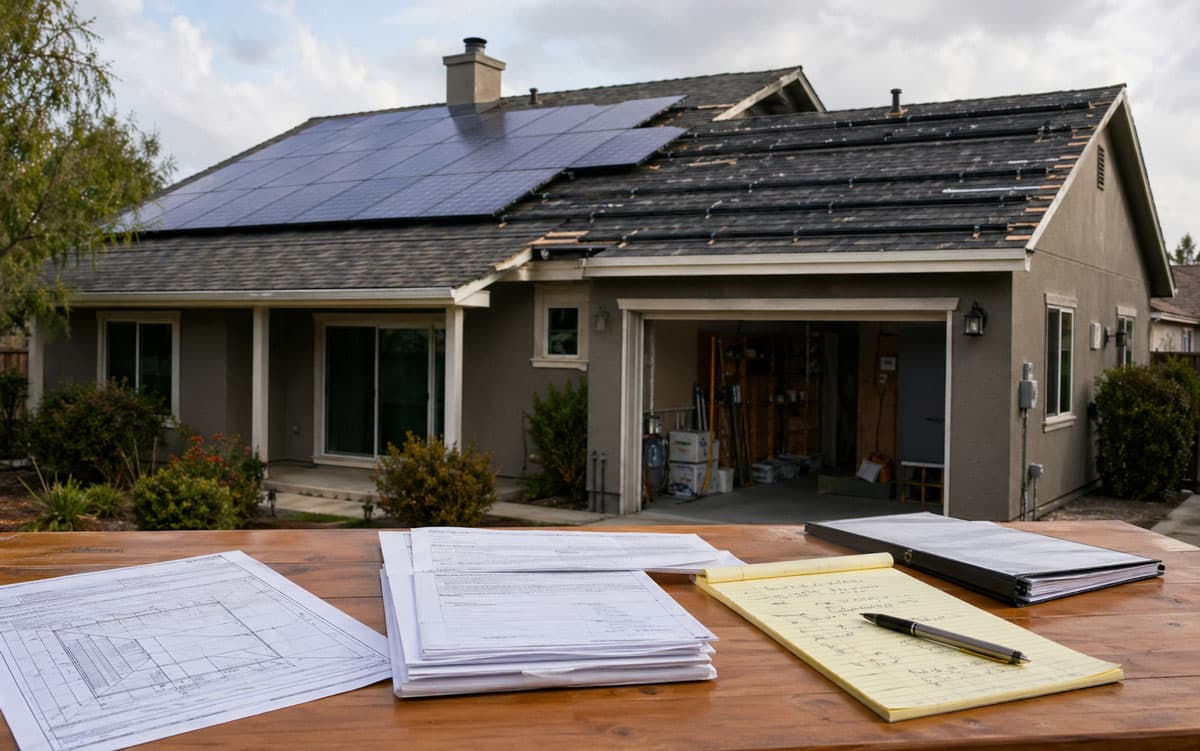
An unfinished installation is one of the hardest bankruptcy situations for a homeowner. Some people signed documents, got financing approval, had equipment delivered, or saw partial work begin, but never got a fully functioning system. Others may already be paying on a project that still is not complete.
If your installation is unfinished, gather as much of the paper trail as you can, including:
- the signed contract,
- financing paperwork,
- permit or inspection documents,
- photos showing installation status,
- emails or texts about timelines,
- payment records, and
- utility interconnection or PTO documents, if any.
The key question is whether the project milestones, funding triggers, completion requirements, and real installation status line up. If they do not, that may be important when reviewing what options you may have next.
What happens to workmanship and equipment warranties?
One of the biggest concerns after a solar installer bankruptcy is warranty uncertainty. Workmanship warranties usually relate to the installation itself, things like mounting problems, roof penetrations, wiring issues, or installation-related defects. Equipment warranties may be separate and may come from the panel, inverter, or battery manufacturer.
That means homeowners should not assume every warranty disappears automatically, but they also should not assume all service will continue exactly as before. The contract may identify who is responsible, whether obligations can be assigned, whether there is third-party warranty support, and how claims must be submitted.
If your concern is system performance, it may help to compare this situation against Why Am I Paying Both My Utility Bill and My Solar Payment? and What Documents to Gather Before Reviewing a Solar Contract.
Important: Bankruptcy does not automatically cancel a solar loan, lease, PPA, workmanship warranty, manufacturer warranty, or payment obligation. What happens next may depend on the contract terms, the lender, the system status, and the facts of your situation. Review your documents carefully, and speak with qualified professionals before making legal, tax, credit, mortgage, or payment decisions.
What if you think you were misled during the sale?
Public reporting on this situation sits alongside wider concerns about solar sales practices. In April 2026, the Texas Attorney General announced a major initiative involving alleged deceptive practices in the solar market, and Freedom Forever was among the companies named in that announcement.
That does not automatically resolve any one homeowner’s situation, but it does make documentation especially important. If you believe you were promised savings that never showed up, told your payment would stay the same when it did not, or given a version of the deal that does not match the signed paperwork, gather:
- sales proposals,
- emails and text messages,
- utility bill savings claims,
- tax credit statements,
- production promises,
- payment explanations, and
- any statement about cancellation, transfer, or refinancing.
It may also help to review Misled by a Solar Sales Rep? What Homeowners Can Do Next and What to Do If Solar Savings Were Misrepresented.
What if you are selling or refinancing your home?
If a Freedom Forever-related agreement includes a loan, lease, PPA, UCC filing, payoff requirement, or transfer process, bankruptcy can make an already complicated sale or refinance even harder to navigate. Common problems include unclear payoff amounts, transfer delays, title questions, difficulty reaching the right party, and buyer hesitation.
If home-sale or refinance pressure is part of the issue, you may also want to review Can You Transfer a Solar Agreement to a Buyer? and Can Solar Panels Make It Harder to Sell Your House?.
What homeowners should check first
If Freedom Forever appears in your paperwork, start by reviewing the basics before jumping to conclusions:
- who owns or services the loan,
- whether the system was completed,
- whether permission to operate was granted,
- what the contract says about cancellation or disputes,
- who is responsible for service and warranties,
- whether the promises made during the sale match the paperwork, and
- whether a future sale, refinance, or transfer may be affected.
For many homeowners, the biggest value comes from sorting out the structure of the deal before making any major decision. The contract, the financing documents, and the real project status usually matter more than the headline alone.

Need help reviewing a Freedom Forever-related solar contract?
If Freedom Forever is anywhere in your paperwork and the deal already feels unfinished, underperforming, confusing, or harder to carry than expected, a contract review may help you understand what to check first and what possible next steps may be worth reviewing.
A bankruptcy filing does not automatically answer every question, but it can make weak paperwork, unfinished work, and unclear obligations much more urgent to sort out. If you are dealing with that kind of uncertainty, start with the documents and work outward from there.